|
|
|
|
|
|
|
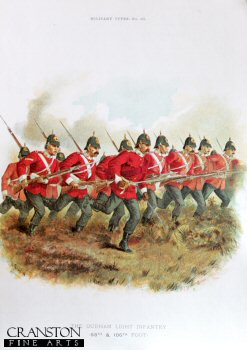
Durham Light Infantry
Military History  Army English Regiments Army English Regiments  Durham Light Infantry Durham Light Infantry |
[UP] - Welsh Regiment - 1st Middlesex - Manchester - Norfolk - Suffolk - Lincolnshire - Essex - King's Royal Rifles - Devonshire - Royal Lancaster - Warwickshire - Somerset Light Infantry - Durham Light Infantry - Berkshire - Gloucestershire - Northumberland Fusiliers - Dorsetshire - East Lancashire - Shropshire Light Infantry - East Surrey - West Surrey - Northamptonshire - Royal Sussex - Loyal North Lancashire - Royal West Kent - Sherwood Foresters - Royal Marine Light Infantry - North Staffordshire - Hampshire - Yorkshire - Worcestershire - East Yorkshire - South Staffordshire - Yorkshire Light Infantry - East Kent - East Middlesex - Border - Lancashire - Cornwall - Liverpool - Leicestershire - Oxfordshire |
| Photographs of the Durham Light Infantry, during the reign of Queen Victoria. | |
The Durham Light Infantry RegimentThe Durham Light Infantry Regiment -Regimental District 68 -consists of the 68th and 106th Foot. The former was formed in 1768, and has a relationship of origin with the famous Welsh Fusiliers, being formed from the second battalion of that regiment. The 68th were engaged in the incursions of Cherbourg, and in 1764 went to Antigua, where they remained some eight years. For the following thirty years or more they served at Gibraltar, in the actions at St. Lucia, and again in the West Indies, till the year 1809 found them taking part in the ill-fated Walcheren expedition under the Marquis of Huntly. Here, after having obtained the honourable capitulation of Flushing, with the loss to our army of only nine men killed and not fifty wounded, the forces were allowed to remain, till out of thirty-nine thousand odd who composed the expedition as its commencement, nearly sixteen thousand had either already died or were stricken with mortal illness. From 1811 to 1814 they took part in the Peninsular War, where honours came thick upon them. A second battalion joined Wellington at Badajoz in 1811, being subsequently joined by the first battalion, and at Salamanca they shared in one of the most famous battles fought by Wellington. Its details have before been given, and the part played by the 68th is matter of history, but its importance runs the chance of nowadays underrated. Yet this is how the historian of the campaign refers to it, and the reference to the personality of the Great Commander is not without its interest to us who live in the era of ?new men, other minds:?-?This famous battle, in which the English general, to use a French officer?s expression, defeated forty thousand men in forty minutes! Yet he thought it as if his great genius disdained such trial of its strength. Late in the evening of that great day I saw him behind my regiment, then marching towards the ford. He was alone; the flush of victory was on his brow; his eyes were eager and watchful, but his voice was calm and even gentle. More than the rival of Marlborough, for he had defeated greater generals than Marlborough ever encountered, he seemed, with a prescient pride only, to accept the victory as an earnest of greater glory.? At Burgos, and the retreat there from, the 61st fought with unsurpassed devotion; they shared in the strife at Pampeluna; at the battle of Neville they won great distinction by their desperate attack ion the strong redoubt of San Pe, distinction emphasized by their conduct in the passage of the Adour. At the Pyrenees they saved, where ?after years toil and combats, admired rather than understood, Lord Wellington, emerging from the chaos of the peninsula struggle, crowned the Pyrenees a recognised conqueror. From that pinnacle the clangour of his trumpets was heard, and the splendour of his genius blazed out, a flaming beacon for warring nations.? They bear ?Orthes? on their colours, a distinction bravely earned, and though they were not present at the crowning battle of Waterloo, none of the regiments that bear ?Peninsula? amongst their honours have shown a better title to its comprehensive glory than the first battalion of the Durham Light Infantry. Though the intervening years were far from idly spent, we must need pass them over, and come to the period of the Crimea. Then again did the 68th come-in sporting phrase-to the fore ?with a rush.? At the Alma, where ?the murderous fire of the batteries, and the volleys fired from the numerous riflemen, was so terrific that the English columns seemed to stagger under the fearful shower of shot, shell, and grape where yet the men pressed bravely on in the dreadful struggle,? the 68th gave good account of themselves; at Balaklava they were again engaged; at Inkerman, where they were in the Third Division, they bore a right manful part in ?the soldiers? battle.? One is apt sometimes to think and speak as though Inkerman ended the campaign, and to omit or pass over the numerous field engagements, the constant ?wear and tear,? the sufferings and privations that were gone through before Sevastopol was finally evacuated. The losses of the 68th throughout the campaign were ten officers and three hundred and ten privates killed, died of disease, and wounded. In 1858 they were in Burmah; eight years later saw them engaged in the remote, unfamiliar warfare then waged in New Zealand. In England it had been the fashion to speak of the Maories as ?wretched savages;? events in 1860 had taught us, with unpleasant emphasis, ?How much the wretched dared.? Here they were under the command of Colonel Greer, and at the disaster of the Gate Pa did all that was in the power of one regiment to do to advert the misfortune. They-with some marines-had during the night taken a position in rear of the Maories, and repulsed those of the enemy who strove to escape that way. Unfortunately this very repulse was productive of harm, for the foe, hindered in their retreat, returned to the Pa, and increased the panic by the suddenness of their attack. Recriminations for a time were general. It was said that the 68th had tried three times to storm the Pa, and each time had failed. ?It was not duty of the 68th to storm the Pa, they were assigned their position in the rear to cut off the enemy?s retreat.? They denied that they either assaulted, or, in consequence, that they were repulsed, and the comparative smallness of there loss leaves a strong additional argument in favour of this view. By the time peace was enforced the regiment had to mourn eight men killed and forty-seven-including eight officers-wounded. Since that time the 68th have not been engaged in any important engagements, but their record-briefly set forth even as it is here-gives warrant, of no doubtful import, of their right to claim a high rank amongst the regiments of Her Majesty?s army. The second battalion, the 106th, was raised in 1839 as a regiment in the service of the Hon East India Company, and was known as the Second Bombay European Regiment. Their chief warlike employment has been in the Persian campaign of 1857, when they were amongst ?the small force that invaded the land of that Cyrus who was King of Babylon, Media, and Persia,? and the names upon their colours show the service they have rendered. The village of Bushire, a place of considerable importance, was captured without much difficulty. But the campaign was not at all to be of easy nature. ?During the first two day?s march this little army encountered two of the most disagreeable incidents of a tropical climate. First, a gale of wind sprang up, carrying with it huge cloud of sand, which penetrated not only the eyes, nose, mouth, and ears, but seemed actually to force its way into the pores of the skin. When the army halted, and were bivouacked in order to march, a tremendous thunderstorm burst upon them, rain and hail coming down in torrents, when both officers and men were drenched to the skin, for they had no cover such as tents and trees. A Piercing cold wind blew upon them, and rendered their condition more trying than can easily be imagined, except by those who have experienced similar inconveniences. The battle of Kooshab resulted in the entire rout of the enemy, who was defeated at every point, and in the retreat was cut up by the artillery and cavalry. A couple of brass guns were captured, a standard, and a large number of muskets. The Enfield rifle, which was used in this affair, cast terror on the Persians. On one occasion a horseman, who was making threatening demonstrations at a distance of eight yards, was neatly picked off by a good shot, an officer in the 2nd European Light infantry.? With other regiments of the East India Company?s service they joined the Queen?s Army in 1861, and were numbered the 106th. Late in the Egyptian campaign the regiment was employed, and took part in the battle of Giniss. Extracted from ?Her Majesty?s Army?s? How Private John Warwick Of The 2nd Battalion, Durham Light Infantry, Won The D.C.M. At Troyon On September 16th 1914, the 2nd Durham Light Infantry, who had just been sent out from England with the rest of the 6th Division, arrived on the Aisne, and after being kept in reserve for a couple of days on the south, they crossed the river, and took over the trenches occupied by the 1st Northampton?s high up on the plateau of Troyon. The trenches held by the company to which Private John Warwick, the hero of the gallant deeds we are about to relate, belonged were situated about forty yards from the top of a ridge, the exact spot which, a day or two before, had witnessed one of the most shameful examples of Hunnish treachery to be found in the whole war. About half past two in the afternoon of the 17th, a body of Germans had breasted the ridge, carrying a large white flag in token of surrender. About one hundred of the Northampton?s went forward to bring in the surrendering Huns, and called to them to lay down their arms, some of our men throwing down their own rifles to make their meaning clear. Suddenly, in accordance with a prearranged plan, the Germans threw themselves flat on the ground, while from behind the ridge appeared a second line of the enemy, who opened fire at point blank range upon the unsuspecting Northampton?s. Happily the Northampton?s trench was flanked by a machine gun section of the 1st Queen?s, who with the assistance of some of the Coldstream Guards, enfiladed the treacherous Huns with murderous effect, killing and wounding over three hundred, while another one hundred surrendered, this time in earnest. On the morning of the 20th, after our artillery, concealed in a wood at the foot of the slope, had bombarded the German trenches on the other side of the ridge, the Durhams were given the order to attack. Before, however, they had reached the crest, they were held up by a withering fire, and an officer of Warwick?s company, Lieutenant-afterwards Captain Twist, fell, shot through the neck. Warwick and another private named Howson, threw themselves down beside the lieutenant, and having bandaged his wound, asked permission of Major Robb, who commanded their company, to try and carry him to the dressing station. This was granted, and though the ground was being very heavily shelled, they succeeded in getting him there safely. On their return to the British trenches, to which, in the meantime, their company had been obliged to retire, Warwick saw that one of his comrades, Private Maughan, had been left lying wounded on the crest of the ridge, on the very spot where the treacherous Huns had made their appearance with the white flag three days before. He crawled up the slope and succeeded in assisting Maughan, who was wounded in the hip, back to safety. He then learned that MajorRobb was lying mortally wounded on the enemy?s side of the ridge, where upon the brave fellow at once volunteered to risk his life for the third time, in an attempt to bring his unfortunate officer in. On this occasion he did not go alone, a comrade, Private Nevison, offering to accompany him. Flattened to earth, the two men wriggled their way up the slope and over the crest to the spot where the dying major lay, though hardly had they topped the rise when they were spotted by the Germans, and greeted with a storm of bullets. Just at this moment, however, our artillery started to bombard the enemy?s trenches and gave the Huns something else to think about. Taking advantage of this welcome diversion, the two privates started on their return journey, carrying Major Robb between them, Nevison being on the right and Warwick on the left. They had not preceded many paces, however, when the German snipers spotted them, and bullets began to hum past their heads. Nevertheless, they held stoutly on their way with their burden, cleared the crest of the ridge and began to run down the farther slope towards the British trenches, when suddenly two rifles cracked simultaneously, and dropping the wounded officer, both Warwick and Nevison fell to the ground. After a moment or two the former was seen to sit up, but the latter lay quite still. He had been shot through the brain, and death had been instantaneous. Friendly hands carried the three men back to our trenches, whence Major Robb and Warwick were conveyed to the dressing station. The major died some hours after; but his brave rescuer?s wound, though severe, was happily not a dangerous one, and he recovered. Private-now corporal John Warwick, who was awarded the Distinguished Conduct Medal for these most gallant deeds, is thirty years of age and his home is at Darlington. Extracted from 'Deeds That Thrill The Empire' THOMAS
DE COURCY HAMILTON (Captain, Afterwards
Major-General) 68th Durham Light Infantry Knight
of the Legion of Honour
On the night of May 11th 1855, the Russian made a most
determined sortie from Sebastopol, but Captain Hamilton led a few men
from a battery of which he held possession and boldly charged the enemy.
His gallantry and daring conduct on this occasion was most
conspicuous, and by his courageous initiative the works were saved from
falling into the enemy?s hands. Major-General Hamilton, son of the late
James John Hamilton, Esq., Ballymacoll, Co. Meath, was born at Stranraer,
Wigtonshire, and July 20th 1825.
Educated privately. Joined
the 90th Light Infantry, 1842, serving through the Kaffir War
of 1846. Present with the
68th Light infantry at Alma, Balaklava, Inkerman and the
siege and fall of Sebastopol, obtaining medal and four clasps and the
Turkish medal. Retired
1874. JOHN MURRAY (Sergeant) 68th Regiment (Durham Light Infantry) On June 21st 1864, at the storming of the Maori position, at Tauranga, New Zealand, Sergeant John Murray behaved in a most brave manner. He ran up to one of the rifle-pits, containing tem men, and, absolutely by himself, killed or wounded every one of them. He then proceeded up the works, fighting in a most desperate manner, bayoneting several more. JOHN BYRNE (Private) 68th Regiment Durham Light Infantry At the battle of Inkerman, November 5th 1854, the 68th were ordered to retire but Byrne returned towards the enemy and brought back a wounded soldier who would otherwise have fallen into their hands. On May 11th, following he engaged in a hand-to-hand fight with a Russian on the parapet of the work he was defending. He killed his opponent and took away his arms. |
|
|
Officers, Durham Light Infantry, in India (1897) Original page from the Army and Navy published 1897, this photograph in a set of three depicting officers in India for sale priced ?15. Reference V4/24 |
| |||||||||||||||||||||||||||||||||||||||||||||||||||||||||||||||||||||||||||||||||||||||||||||||||||||||||||||||||||||||||||||||||||||||||||||||||||||||||||||||||||||||||||||||||||||||||||||||||||||||||||||||||||||||||||||
|
Contact Details |
|
Sign Up To Our Newsletter!
This website is owned by Cranston Fine Arts. Torwood House, Torwoodhill Road, Rhu, Helensburgh, Scotland, G848LE Contact: Tel: (+44) (0) 1436 820269. Email: Email Us |
 |