|
|
|
|
|
|
|
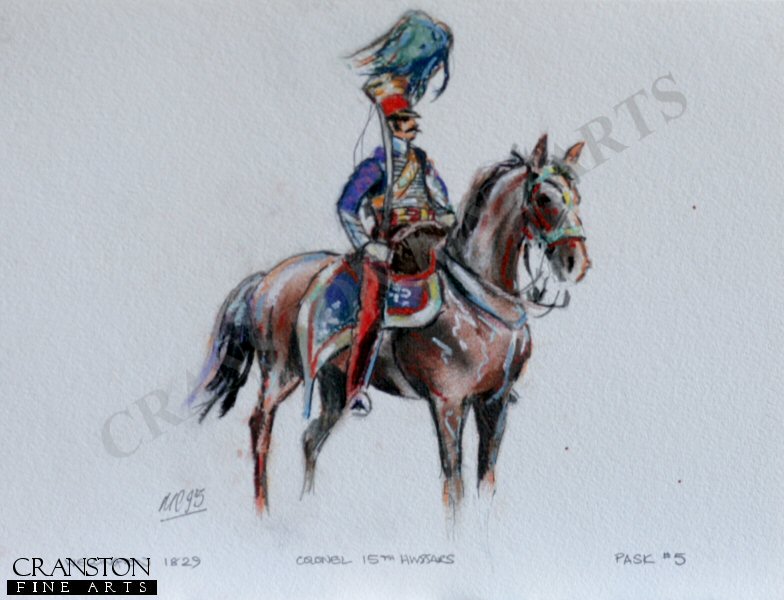
15th Hussars
Military History  Army Hussar Regiments Army Hussar Regiments  15th Hussars 15th Hussars |
[UP] - 3rd Hussars - 7th Hussars - 8th Hussars - 11th Hussars - 15th Hussars - 18th Hussars - 17th Hussars - 19th Hussars - 10th Hussars - 14th Hussars |
|
Photographs of the 15th Hussars during the reign of Queen Victoria |
|

An Experimental Gun Carriage. |

The 15th Hussars on Church Parade. |
|
How Lance Corporal Fred Aspinall, Of The 15th Hussars, Won The D.C.M. During The Retreat From Mons His offer was accepted, and while the infantry effected their retirement in good order, the brave hussar remained behind the stone heap, facing down the road, with his rifle ready. By this time many of the enemy had begun to break through the hedge on his left and to cross the road, with the intention of making their way through the opposite hedge, at a point not more than two hundred yards from where Aspinall lay hidden. The latter waited until the road was full of them, and then fired into the brown-or rather into the grey. So rapidly did he shoot, and so easy was the target which the Huns, crowding towards the gaps in the further hedge which the foremost had made, presented to a skilled marksman at that distance, that inside a couple of minutes more than a score lay dead and dying in the road; and; in full belief that they were being enfiladed by a regular posse of sharpshooters, the whole line came to a halt, and a apart of them took up a position below a dip in the road, where they lay down and opened fire. The stone heap suffered severely, but the hussar behind it was untouched. However, thinking about it was time to be moving, he crawled along the ground for some ten or twenty yards-still keeping the friendly stone heap between him and the enemy-and then jumped up and made a sash for the farm where he had left his horse. He reached it in safety and found, to his surprise, another horse tethered beside his own, whom?s owner-a man from his own troop named Soper-made his appearance a few moments later. There was no time to inquire he had come from, as bullets were already striking the post of the gate, which was the only way by which they could leave the farm. So Aspinall sprang into the saddle, calling out: ?We shall have to make a dash for it. One-two-three!? And away they went at full pelt, zigzagging from one side o the road to the other to make as difficult a target for the enemy as possible. They had gone some distance without either they or their horses being hit, and Aspinall, thinking that they were now safe, had taken off his cap to give a cheer, when a bullet struck him in the hip, coming out just below the groin and passing through his field dressing. He managed to keep his seat, but pulled his horse into a walk, put his rifle in the bucket attached to the saddle and hung his ammunition on the rifle butt. Then he got off-or rather fell off-as the pain caused by proceeding even at a walking pace was unendurable, and tried to drive his horse in the direction in which the Munsters had gone. But the animal refused to leave his master, until a man belonging to the R.A.M.C. came by and led him away. Shortly afterwards, an officer of the same corps came up, examined the hussar?s wound took his name, and promised to send an ambulance for him. However, before the ambulance arrived, a body of Germans appeared upon the scene, and Aspinall found himself a prisoner. Drawing his revolver, an officer approached the wounded man, and demanded in which direction the Munsters had retired, threatening to shoot him out of hand if he refused to tell him. But Aspinall, without changing countenance, calmly inquired what answer the German would make if he were in his place. Upon which the officer, seeing that there was nothing to be got out of his prisoner and admiring his courage, laughed good humouredly, and without pressing the question, put back his revolver and went away. Lance-Corporal Aspinall who was awarded the Distinguished Conduct Medal for his gallant conduct, appears to have been well treated by his captors, and was afterwards sent as a prisoner to Hanover. He is thirty-three years of age and a Yorkshire man, his home being at Doncaster. Extracted from 'Deeds That Thrill The Empire How Sergeant Edward John Clarke, Of The 15th Hussars, Won The D.C.M. At The Chateau Herentage One of the most stirring moments episodes of that eventful day was the gallant defence of the Chateau Herentage, situated between three and four miles east of Ypres, near the Menin road, and about 150 yards behind our first line trenches, by Sergeant Clarke and a handful of men of the 15th Hussars, in conjunction with thirty Turcos and their sergeant. On the previous evening Sergeant Clarke had received orders to take his troops up to the first line trenches, as escort to two machine guns belonging to the 15th Hussars, which were going into action. On reaching the Chateau Herentage, he was told by the officer in charge of the machine guns to leave his troop there and accompany him to the trenches; but after seeing the guns, which were attached to the West Ridings, placed ready for action, he returned to the chateau, with orders to defend it at all costs. At the chateau Sergeant Clarke found thirty Turcos under a sergeant, and some more of these fierce warriors were stationed in dugouts to the left of the house. Behind the chateau were some shallow trenches, unoccupied, and between them and the Menin Road the Brigade Headquarters. There were no troops between the first line trenches and the Brigade Headquarters but the little garrison of the chateau and the Turcos in the dugouts. Between five and six o?clock on the morning of the 11th the Germans began a fierce bombardment of our first line trenches, and soon the shells were dropping close to the chateau. About nine o?clock its occupants saw the Turcos leaving their dugouts and retiring, and at the same time the British first line falling back. Shortly afterwards, a strong force of Germans appeared in column on the edge of a wood about one hundred yards in front of the chateau, where they halted, and looked a though they intended to deploy and rush the house. Clarke, who had stationed his men-twelve in number-at the loopholes on two floors of the chateau, at once ordered them to fire, which they did with considerable effect. The enemy, evidently under the impression that the chateau was far more strongly defended than was actually the case, and unwilling to waste time in taking it by assault, thereupon began to advance across the front of the house, and obliquely, towards the Menin Road, passing-so great was their haste to reach their objective-within fifty yards of our men and being mercilessly enfiladed in the process. They had almost reached the Menin Road when the British supports came up, and drove them back in disorder through the grounds of the chateau, where they again suffered severely from the enfilading fire of the garrison, over one hundred of their dead being counted afterwards. Before our broken first line was restored Clarke and his men had been cut off for two and a half hours, and, with the assistance of the remaining three troops of his squadron, they subsequently held the chateau for three days against very heavy shelling and machine gun fire. Sergeant Clarke, who received the Distinguished Conduct Medal ?for very conspicuous ability and gallantry,? is twenty-five years of age and a Londoner, his home being at Wood Green. Extracted from 'Deeds That Thrill The Empire How Private Frederick Neville, Of The 15th Hussars Won The D.C.M. At Zandvoorde Few military exploits are more calculated to impress the imagination than the accomplishment of some daring feat of despatch riding through the midst of an enemy?s country or over ground swept by artillery or rifle fire; and perhaps never in the present war has work of this kind performed with more conspicuous gallantry than that done by Private Frederick eville, of the 15th (?The King?s?) Hussars, in his perilous rides on three successive days at the end of October 1914. The 15th Hussars at this time were acting as Divisional Cavalry for the First Division and were engaged in patrol work in the neighbourhood of Ypres. On October 28th, Private Neville formed one of a patrol consisting of a corporal and four men, which, on reaching a farm at Zandvoorde, ascertained that the enemy was preparing an attack on our infantry. After information to that effect had been sent to Headquarters, the patrol found itself obliged to retire a tremendous artillery and rifle fire from the advancing Germans, who were composed chiefly of battalions of the Prussian Guard. Private Neille was sent with a message to Headquarters, where he was requested by the late General Lomax to return to Zandvoorde with an important despatch. On reaching Gheluvelt, he found that the road between that and Zandvoorde was being so heavily shelled by the enemy that it seemed that no living thing could win through in safety. But, without a moment?s hesitation, the gallant Hussar touched his horse with the spur and rode at full gallop into the inferno. Before, however he had proceeded very far, there came a deafening crash, and he found himself lying in the ditch with his horse on top of him. Fortunately, neither man nor horse was hurt, and, crawling out of the ditch and dragging his trembling charger after him, he remounted his perilous ride and reached his destination, which was within two hundred yards of the enemy?s lines, in safety. On the following day (October 29th), the services of this daring light cavalryman were again requisitioned, this time to convey a message of a windmill to which the British staff had retired during the night. Learning that it was impossible to proceed by the Gheluvelt Road, he was obliged to make his way thither across some open country upon which the German shells were falling with alarming frequency. He was still some five hundred yards from the windmill when a ?Jack Johnson? exploded in front of him, the concussion of the bursting shell blowing rider and horse completely over though neither was hit. Regaining his feet, he led his horse to a farm two hundred yards from the windmill and, leaving him there, accomplished the rest of the journey by crawling along the ground. After delivering the message with which he had been entrusted, Private Neville returned to Headquarters. On the way he noticed that whenever any attempt was made by the British to send reinforcements to the firing line the, intervening ground was immediately covered by a curtain of shrapnel and high explosive, and came to the conclusion that the neighbouring church was being used by the Germans as an observation post. His opinion was speedily confirmed; for no sooner had the fire of our artillery than demolished the church it was found that reinforcements could be brought up in perfect safety. On October 30th Private Neville again rendered valuable service. While conveying a despatch to our infantry brigade, he came upon a wounded motorcyclist lying by the side of the road. The latter had been charged with a verbal message of the highest importance, which he repeated to the Hussar, who delivered it safely at its destination, and by so doing contributed to relieve a very critical situation. On this day, as on the two preceding ones, Private Neville was continually exposed to the greatest danger, but once more the good fortune to escape unhurt. When not soldiering, Private Neville, who at the time of these gallant exploits was in his thirty-second year, lives in London. Extracted from 'Deeds That Thrill The Empire |
|
| |||||||||||||||||||||||||||||||||||||||||||||||||||||||||||||||||||||||||||||||||||||||||||||||||||||||||||||||||||||||||||||||||||||||||||||||||||||||||||||||||||||||||||||||||||||||||||||||||||||||||||||||||||||||||||||||||||||||||||||||||||||||||||||||||||||||||||||||||||||||||||||||||||||||||||||||||||||||||||||||||||||||||||||||||||||||||||||||||||||||||||||||||||||||||||||||||||||||||||||||||||||||||||||||||||||||||||||||||||||||||||||||||||||
|
Contact Details |
|
Sign Up To Our Newsletter!
This website is owned by Cranston Fine Arts. Torwood House, Torwoodhill Road, Rhu, Helensburgh, Scotland, G848LE Contact: Tel: (+44) (0) 1436 820269. Email: Email Us |
 |